| Status: | Active, not currently accepting new members |
| Coordinator: | |
| When: | Monthly on Tuesday mornings 10:30 AM Third Tuesday |
| Venue: | Members House |
The Military & Social History Group was formed in 2017.
The format we have evolved consists of one or two of the members giving a presentation of a particular subject of Military or Social history in which they are interested or have done research. Sometimes this is a battle or an incident concerning a prominent person on the Military history stage. It may be of a more general nature reflecting the 'social' aspect of the group remit. As we began just as a Military History Group that tends to be the main focus of attention but social aspects are also covered.
Recently we have looked at The Home Front during WW2, The use of Drones in Modern Warfare and their general use and most recently The War of 1812.
Nearly always we find something unusual or not generally known about the person or event. This then leads on to discussion and finally we plan for our next meeting and decide who is prepared to offer the presentation.
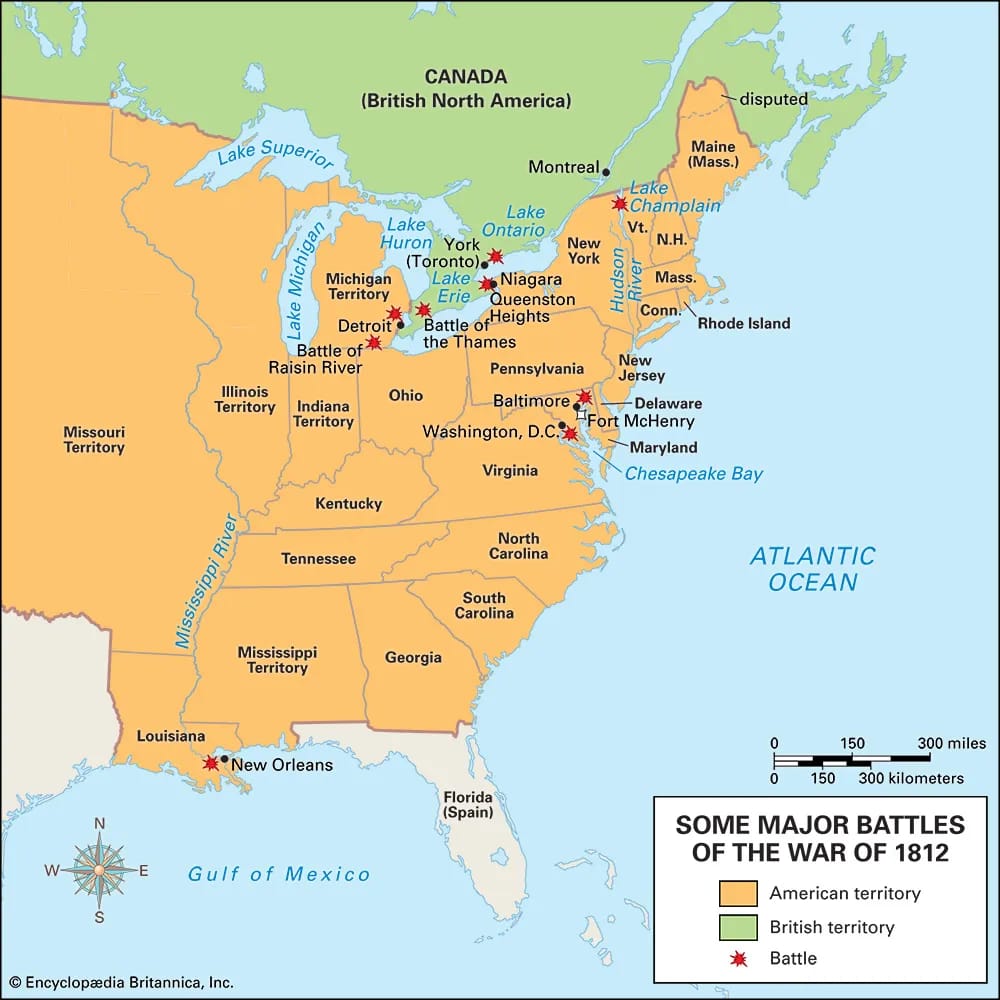
The War of 1812 given by Chris B
The talk started by looking at North America as it was at the end of the Revolutionary War in 1776. Then looked at developments post-war in particular the US expansion westwards in to Indian territories. An Indian confederation had been formed to counter US expansionism.
Following Napoleon's seizure of power in France, Britain's attention was concentrated on countering the French threat. This included blockading French ports and restricting international trade with France, the US's main trading partner. The aggrieved US acting on Britain's withdrawal of forces from Canada, invaded Canada in what some Americans call the "2nd War of Independence".
Britain found natural allies in the Indian confederation which together repelled the initial US assault. The war is characterised by a high number of small engagements over a wide geographical area. Campaigns in the Great Lakes region continued until 1814 with no overall outcome. Napoleon's exile to Elba released British forces from Europe and these were deployed to Chesapeake Bay, where the White House was burned down. As the balance of power switched, the Americans sought a peace treaty which was signed at Ghent in late 1814. Fighting continued into 1815.
The US/Canada border was restored to it's original position. British support for the Indian tribes ended and the US government took advantage of the Indians' weakened position to enforce over 200 treaties whereby tribes gave up land and accepted being moved to reservations West of the Mississippi.
The talk finished by looking at American versions of the outcome of the war, some of which differ considerably from ours.